Industrial heating devices are very significant to modern production processes. One of the most significant devices that have gained popularity in many industries is the industrial oven. These devices are manufactured with the aim of providing controlled heating for drying, baking, curing, pre-heating, annealing, and powder coating, among other industrial functions.
The automotive industry, engineering industry, pharmaceutical industry, food manufacturing industry, electronics industry, and powder coating industry are just but some of the many industries where industrial ovens have gained prominence. Learning about how industrial ovens work, their applications, different types, and buying considerations, can help you boost your productivity.
What is an Industrial Oven?
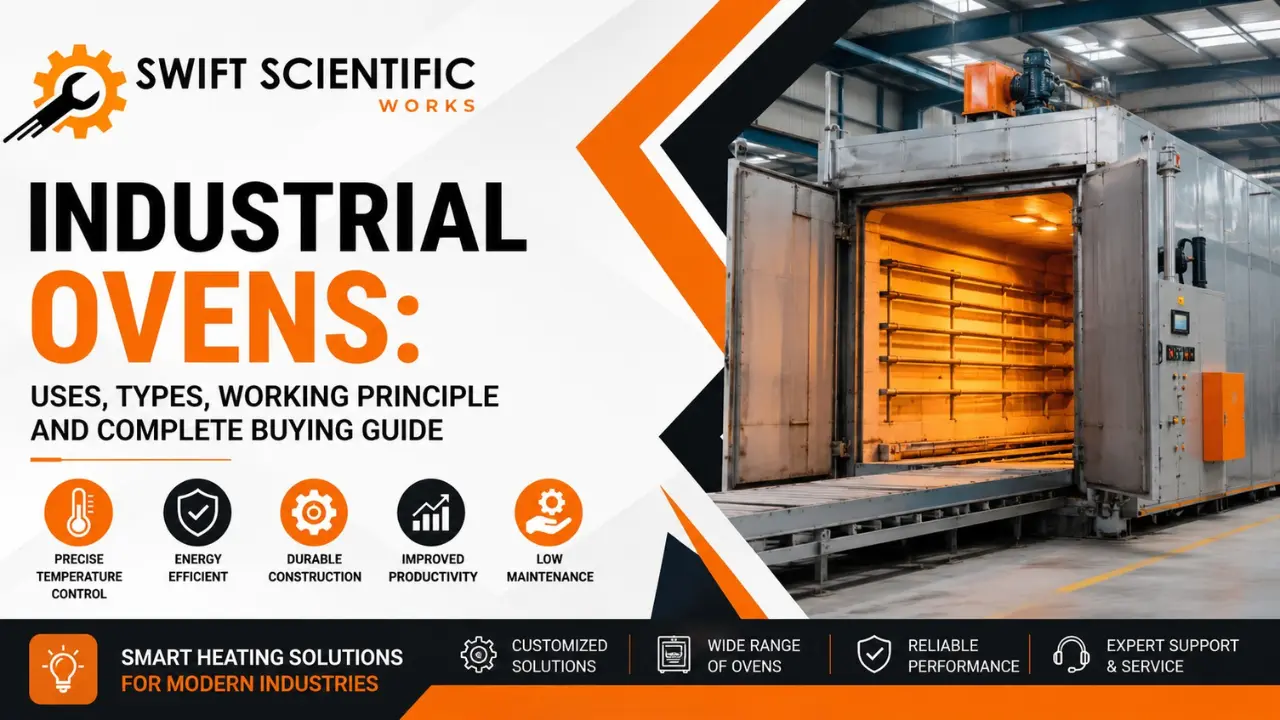
An oven industrial system is a specialized heating chamber designed to expose materials, products, or components to controlled temperatures for a specific period. Unlike domestic ovens, industrial ovens are built to handle heavy-duty applications and continuous operation in manufacturing environments.
Industrial ovens are engineered to provide uniform heat distribution, precise temperature control, and reliable performance for various production processes. They are commonly used in industries where heating, drying, curing, or thermal processing is required.
What is an Oven Used For?
A common question among manufacturers is, “oven is used for what purpose?”
The answer depends on the industry and application. Industrial ovens are used for:
- Drying coated surfaces
- Curing powder-coated products
- Heat treatment of metals
- Baking industrial products
- Moisture removal
- Paint curing
- Preheating components
- Sterilization processes
- Chemical processing
- Food production
The versatility of industrial ovens makes them valuable across numerous manufacturing sectors.
Working Principle of an Industrial Oven
The basic working principle of an industrial oven involves generating heat and circulating it evenly throughout a closed chamber.
The process typically includes the following stages:
1. Heat Generation
Heat is produced using various energy sources such as:
- Electricity
- LPG
- PNG
- Diesel
- Natural gas
- Infrared heating systems
2. Heat Distribution
Blowers and circulation fans distribute heated air uniformly throughout the chamber.
This ensures that all products receive consistent heating regardless of their position inside the oven.
3. Temperature Control
Modern industrial ovens are equipped with digital controllers that maintain precise temperature settings throughout the process.
4. Product Processing
The material remains inside the oven for a predetermined time until the desired drying, curing, or heating result is achieved.
5. Cooling and Discharge
After processing, products are removed and cooled before moving to the next production stage.
This controlled process ensures consistent quality and efficient operation.
Types of Industrial Ovens
Selecting the correct type of oven is critical for achieving optimal performance and productivity.
Batch Type Industrial Oven
Batch ovens process products in individual loads or batches.
Applications include:
- Powder coating
- Paint curing
- Component drying
- Small-scale manufacturing
Advantages:
- Flexible operation
- Lower initial investment
- Suitable for customized production
Conveyorized Industrial Oven
Conveyorized ovens move products continuously through the heating chamber using automated conveyors.
Applications include:
- Automotive manufacturing
- Powder coating plants
- High-volume production lines
Advantages:
- High productivity
- Continuous operation
- Reduced labor requirements
Powder Coating Curing Oven
These ovens are specifically designed to cure powder-coated components at controlled temperatures.
The curing process creates a durable and attractive finish.
Drying Oven
Drying ovens remove moisture, solvents, or water from products and components.
Industries using drying ovens include:
- Pharmaceuticals
- Electronics
- Food processing
- Chemical manufacturing
Electric Industrial Oven
Electric ovens provide clean heating and precise temperature control.
They are ideal for applications requiring accurate process conditions.
Gas Fired Industrial Oven
Gas-fired ovens use LPG, PNG, or natural gas as fuel sources.
Advantages include:
- Faster heating
- Lower operating costs
- High thermal efficiency
Infrared Industrial Oven
Infrared ovens transfer heat directly to the product surface.
They are suitable for:
- Fast curing
- Drying operations
- Surface treatment applications
Applications of Industrial Ovens
Industrial ovens are used in a wide variety of industries.
Powder Coating Industry
Industrial ovens cure powder-coated surfaces to achieve durability and corrosion resistance.
Automotive Industry
Used for:
- Paint curing
- Component heating
- Heat treatment processes
Pharmaceutical Industry
Used for drying, sterilization, and material processing.
Food Processing Industry
Supports baking, drying, roasting, and food preservation operations.
Electronics Industry
Used for curing electronic components and removing moisture from sensitive devices.
Engineering and Fabrication Industry
Industrial ovens help improve product performance through controlled heating processes.
Benefits of Using Industrial Ovens
Modern industrial ovens offer numerous operational advantages.
- Consistent Product Quality- Uniform temperature distribution ensures repeatable and reliable results.
- Improved Productivity- Automated systems increase production efficiency and reduce processing time.
- Energy Efficiency- Advanced insulation and heating technologies help reduce energy consumption.
- Reduced Material Rejection- Accurate temperature control minimizes defects and quality issues.
- Longer Equipment Life- High-quality industrial ovens are designed for continuous operation and long service life.
How to Choose the Right Type of Oven
Selecting the appropriate type of oven requires careful evaluation of production requirements.
- Production Volume- Determine whether batch processing or continuous production is required.
- Temperature Range- Choose an oven capable of achieving and maintaining the required temperatures.
- Product Size- The oven chamber should accommodate the dimensions and weight of products being processed.
- Heating Source- Evaluate whether electric, gas-fired, or infrared heating is more suitable.
- Energy Efficiency- Modern energy-efficient designs can significantly reduce operating costs.
- Automation Requirements- Advanced systems offer programmable controls, data monitoring, and automated operation.
- Future Expansion- Consider future production growth before investing in equipment.
Why Choose SSW for Industrial Ovens?
SSW (Swift Scientific Works) is a trusted manufacturer of industrial heating and surface finishing equipment. The company provides customized industrial ovens designed to meet diverse industrial requirements.
SSW offers:
- Powder coating curing ovens
- Batch ovens
- Conveyorized ovens
- Gas-fired ovens
- Electric industrial ovens
- Customized heating solutions
With a focus on quality engineering, durability, energy efficiency, and customer satisfaction, SSW helps industries achieve reliable and cost-effective thermal processing solutions.
Future Trends in Industrial Oven Technology
As industries adopt smart manufacturing practices, industrial oven technology continues to evolve.
Emerging trends include:
- IoT-enabled monitoring systems
- Automated temperature control
- Energy-efficient heating technologies
- Remote diagnostics
- Smart production integration
These advancements help manufacturers improve productivity while reducing operating costs.
Conclusion
Industrial ovens are essential equipment for a wide range of manufacturing and processing industries. Understanding what an oven is used for, selecting the right type of oven, and choosing a reliable oven industrial solution can significantly improve production efficiency and product quality.
Industrial ovens are designed for applications such as powder coating, drying, curing, baking, or heat treatment to ensure proper heating to deliver reliable results. Companies can benefit from investing in efficient and quality industrial ovens by collaborating with experienced suppliers such as SSW (Swift Scientific Works).