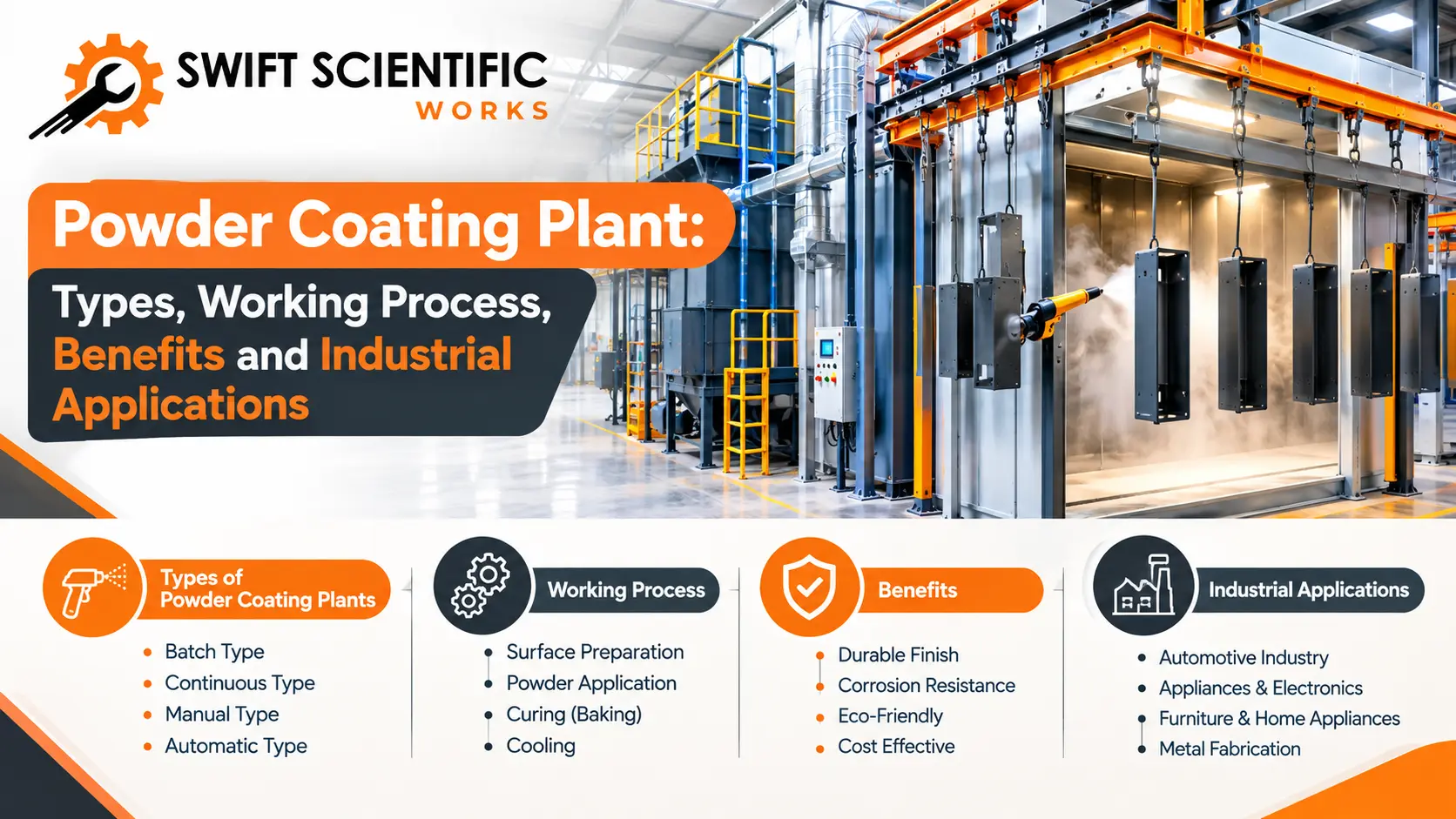
In modern manufacturing, surface finishing plays an important role in improving the appearance, durability, and corrosion resistance of metal products. Industries such as automotive, electrical, furniture, appliances, engineering, and metal fabrication require reliable coating systems to achieve consistent finishing quality. A powder coating plant provides a systematic solution for applying and curing powder coatings on different types of metal components.
Unlike conventional liquid painting, powder coating uses dry powder that is electrostatically applied to the surface and then cured inside an oven. This process creates a strong and uniform finish while supporting efficient material utilization. A complete powder coating plant can include pretreatment equipment, drying systems, coating booths, powder spray equipment, curing ovens, conveyors, and recovery systems.
What Is a Powder Coating Plant?
A powder coating plant is an industrial finishing system designed to clean, prepare, coat, and cure metal components using powder coating technology. The plant combines multiple stages into an organized production process so that products can receive a consistent and durable surface finish.
Depending on production requirements, a plant may be manually operated, batch-operated, or fully conveyorised. The selection depends on factors such as component size, production volume, available factory space, coating requirements, and desired level of automation.
Also Read: Industrial Coating Methods: Powder Coating, CED and Liquid Painting
How Does a Powder Coating Plant Work?
The powder coating process generally consists of several important stages:
1. Surface Preparation
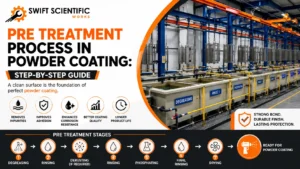
Before powder application, the component needs to be properly cleaned. Oil, grease, dust, rust, and other contaminants can affect coating adhesion. A pretreatment system is therefore used to prepare the surface.
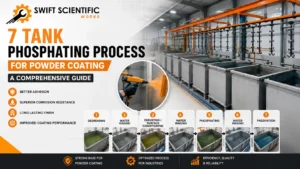
Depending on the application, the pretreatment stage may involve cleaning, rinsing, phosphating, or other chemical processes.
2. Drying
After pretreatment, components are passed through a drying system to remove moisture. Proper drying helps create a clean and dry surface before powder application.
3. Powder Application
The prepared component enters the powder coating booth, where electrostatic spray guns apply powder particles to its surface.
The powder particles receive an electrical charge while the workpiece is grounded. This electrostatic attraction helps the powder adhere to the component.
4. Powder Recovery
Unused powder can be collected through a suitable recovery system. Depending on the plant design and powder type, recovery systems can help reduce material wastage and maintain a cleaner working environment.
5. Curing
After powder application, the coated component enters a curing oven. Controlled heat causes the powder particles to melt, flow, and form a continuous protective coating.
Correct curing temperature and time are important for achieving the required finish, adhesion, hardness, and durability.
6. Cooling and Unloading
After curing, the components are allowed to cool before inspection, handling, packaging, or further assembly.
Types of Powder Coating Plants
Different manufacturing facilities require different coating systems. Common types include:
Conveyorised Powder Coating Plant
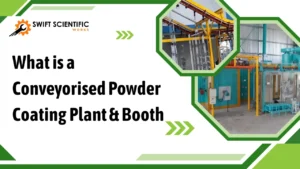
A conveyorised powder coating plant is designed for continuous production. Components move through pretreatment, drying, powder application, curing, and other stages using a conveyor system.
This arrangement is particularly suitable for industries handling large production volumes and repetitive components.
Batch Type Powder Coating Plant
A batch type system is suitable when products are processed in separate batches. It provides greater flexibility for different component sizes, colors, and production quantities.
Batch systems can be useful for small and medium-scale manufacturing operations where continuous production is not necessary.
Manual Powder Coating Plant
A manual powder coating plant allows operators to control important coating operations. It can be suitable for customized products, lower production volumes, frequent color changes, and components with different shapes.
Aluminium Section Powder Coating Plant
Aluminium profiles and sections require specialized handling because of their dimensions and finishing requirements. Aluminium section powder coating plants are designed to support consistent coating of architectural and industrial aluminium profiles.
Main Components of a Powder Coating Plant
A complete powder coating system may contain several components working together:
- Pretreatment plant
- Powder coating booth
- Electrostatic powder coating guns
- Powder recovery system
- Curing oven
- Drying oven
- Conveyor system
- Exhaust and ventilation system
- Electrical control panel
- Temperature control system
- Material loading and unloading arrangements
The exact configuration can be customized according to the product dimensions, production capacity, coating material, factory layout, and process requirements.
Benefits of Powder Coating
Powder coating offers several advantages for industrial surface finishing.
Durable Surface Finish
Properly applied and cured powder coating can provide a hard and durable surface that helps protect metal components from everyday wear.
Corrosion Protection
A suitable coating system can provide an additional protective layer against environmental exposure and corrosion.
Uniform Appearance
Controlled powder application and curing can help achieve consistent color, thickness, and surface appearance.
Efficient Material Utilization
Powder coating systems can incorporate recovery arrangements to collect unused powder, helping reduce material wastage.
Suitable for High-Volume Production
Conveyorised systems can support continuous production and reduce repeated manual handling of components.
Customizable Plant Design
Powder coating systems can be designed according to production requirements, component dimensions, factory space, and automation needs.
Industrial Applications of Powder Coating Plants
Powder coating is used across a wide range of industries, including:
- Automotive components
- Electrical panels and enclosures
- Metal furniture
- Home appliances
- Aluminium profiles
- Engineering components
- Fabricated metal products
- Storage systems
- Industrial machinery
- Steel components
- General metal products
The appropriate plant configuration depends on the material, component geometry, production volume, required finish, and process specifications.
How to Choose the Right Powder Coating Plant?
Before investing in a powder coating system, manufacturers should consider several factors.
Production Capacity: Determine the number and size of components that need to be processed per hour or day.
Component Dimensions: The size and weight of products influence booth, oven, and conveyor dimensions.
Production Method: Decide whether a manual, batch, or conveyorised system is appropriate for the production process.
Factory Space: Plant layout should be planned according to the available installation area and material movement.
Automation Level: Higher production requirements may benefit from automated conveyors, spray systems, controls, and recovery equipment.
Energy Efficiency: Heating systems, insulation, airflow, and process control can influence operating costs.
Why Choose Swift Scientific Works?
Swift Scientific Works provides surface coating solutions for different industrial requirements, including conveyorised, batch type, and manual powder coating plants. The company also offers liquid painting booths, CED coating plants, pretreatment systems, industrial ovens, and other finishing equipment.
Its solutions can be developed according to production requirements, factory layout, component specifications, and operational needs. The company states that it provides plant design, manufacturing, installation, commissioning, customization, and after-sales support.
Conclusion
A powder coating plant is more than just a coating booth or spray gun. It is a complete finishing system in which surface preparation, powder application, curing, material movement, and process control work together to produce a consistent finish.
From small manufacturing units using manual systems to high-volume industries operating conveyorised production lines, the right powder coating setup can improve finishing consistency, production efficiency, and overall process control. Selecting the appropriate plant design based on component size, production capacity, available space, and coating requirements is essential for achieving reliable long-term performance.