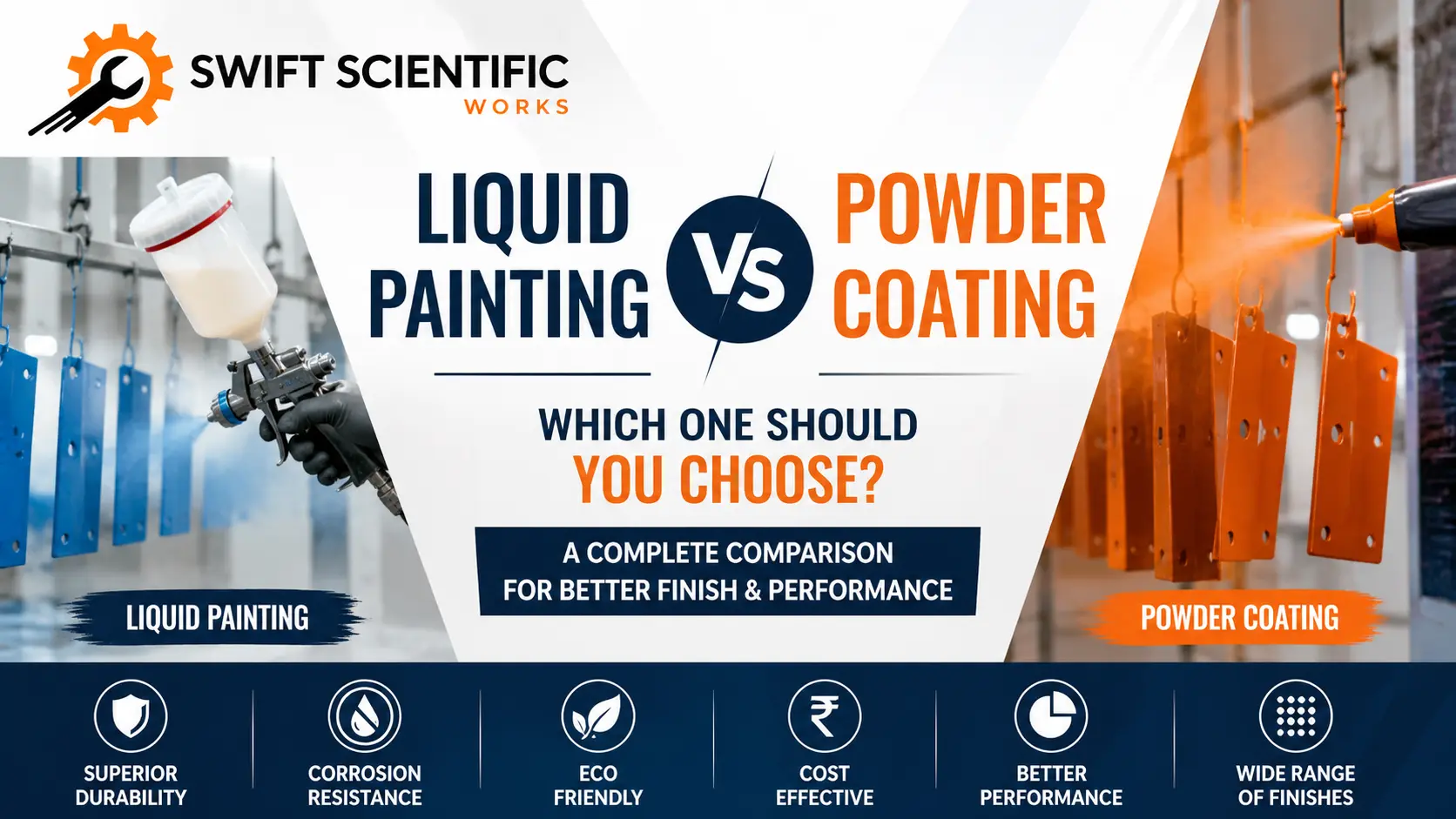
In the manufacturing industry, surface finishing is much more than just improving the appearance of a product. A high-quality coating protects metal surfaces from corrosion, increases durability, enhances product life, and creates a professional finish that adds value to the final product. Among the various finishing technologies available today, liquid painting and powder coating are two of the most widely used methods.
Many manufacturers face a common challenge when planning a new finishing line or upgrading an existing one: should they invest in a liquid painting plant or a powder coating plant? Both technologies have proven their effectiveness across different industries, but the right choice depends on factors such as product type, production volume, durability requirements, environmental conditions, and long-term operating costs.
Understanding the powder coating vs painting debate is important because the finishing process directly impacts product performance and customer satisfaction. While both systems serve the same basic purpose, the way they work and the results they deliver are quite different.
Understanding Liquid Painting
Liquid painting is one of the oldest and most commonly used surface finishing methods. In this process, liquid paint is sprayed onto the surface of a product using specialized spray equipment. The painted component is then allowed to dry naturally or is cured in a drying oven to achieve the desired finish.
Liquid painting remains popular because of its flexibility and ability to produce a wide variety of colors and finishes. It is commonly used in industries where custom color matching is important or where products cannot withstand high curing temperatures.
One of the biggest advantages of liquid painting is its adaptability. It can be applied to a wide range of materials and product sizes. Large fabricated structures, heavy machinery, agricultural equipment, and automotive body parts are often finished using liquid painting systems. Since repairs and touch-ups can be performed easily, many manufacturers still prefer this method for certain applications.
However, liquid painting usually involves solvents that may generate volatile organic compounds (VOCs). This requires proper ventilation systems and environmental compliance measures during operation.
Also Read: Electroplating vs Powder Coating: Differences, Benefits & Industrial Applications
Understanding Powder Coating
Powder coating is a more advanced finishing technology that uses dry powder coating powder instead of liquid paint. The powder is electrostatically charged and sprayed onto the surface of a metal component. After application, the coated product enters a curing oven where the powder melts and forms a strong, durable coating.
Over the last few decades, powder coating has gained significant popularity because of its superior performance and environmental benefits. Unlike liquid painting, powder coating does not require solvents, making it a cleaner and more sustainable finishing process.
The resulting coating is generally thicker and more durable than traditional paint. This makes powder coating an excellent choice for products that are exposed to harsh operating environments, outdoor conditions, moisture, chemicals, or mechanical wear.
Industries such as automotive manufacturing, electrical panel production, furniture manufacturing, construction, and industrial machinery increasingly rely on powder coating because of its long-lasting finish and lower maintenance requirements.
Difference Between Powder Coating and Painting
Although both processes are used for surface finishing, there are several important differences that manufacturers should consider before making an investment decision.
| Feature | Powder Coating | Liquid Painting |
|---|---|---|
| Coating Material | Dry powder coating powder | Liquid paint |
| Solvent Requirement | No | Yes |
| Coating Thickness | Thicker and uniform | Thinner |
| Durability | Excellent | Good |
| Corrosion Resistance | Excellent | Good |
| Environmental Impact | Low | Higher |
| Material Utilization | Very High | Moderate |
| Maintenance Cost | Lower | Higher |
| Touch-Up Capability | Limited | Easy |
| Long-Term Performance | Superior | Moderate |
This table provides a quick overview, but understanding how these differences affect real-world applications is even more important.
Durability: Which Coating Performs Better?
Durability is often the primary factor manufacturers consider when comparing powder coating vs painting. Products used in industrial environments are frequently exposed to abrasion, impact, sunlight, chemicals, and changing weather conditions. The coating must be able to withstand these conditions without deteriorating.
Powder coating generally offers superior durability because the curing process creates a strong bond between the coating and the substrate. The resulting finish is highly resistant to scratching, chipping, peeling, and fading. Even after years of use, powder-coated products often maintain their appearance and protective properties.
Liquid painting also provides a protective finish, but it is generally more susceptible to wear and damage over time. In demanding industrial environments, painted surfaces may require periodic maintenance or repainting to maintain their appearance and performance.
For applications where long-term durability is essential, powder coating is usually the preferred solution.
Corrosion Protection and Product Life
Corrosion is one of the most common reasons for product failure in metal components. A quality coating acts as a barrier that prevents moisture and contaminants from reaching the metal surface.
Powder coating is particularly effective at preventing corrosion when combined with proper pre-treatment processes. The thick and continuous coating layer provides excellent protection against rust and environmental damage. This is one of the reasons why powder coating is widely used for outdoor products and industrial equipment.
Liquid painting can also provide corrosion resistance, but its effectiveness depends on factors such as paint quality, coating thickness, and maintenance practices. In highly corrosive environments, powder coating often delivers better long-term results.
Environmental Considerations
Environmental regulations are becoming increasingly important for manufacturers worldwide. Companies are under pressure to reduce emissions, minimize waste, and adopt sustainable production methods.
One area where powder coating clearly stands out is environmental performance. Since powder coating powder contains no solvents, the process produces minimal VOC emissions. In addition, oversprayed powder can often be recovered and reused, reducing material waste.
Liquid painting systems typically involve solvents that release VOCs during application and curing. As a result, additional ventilation, filtration, and environmental control measures may be required. For businesses focused on sustainability and environmental compliance, powder coating often provides a significant advantage.
Cost Considerations
When evaluating a finishing plant, many manufacturers focus only on initial investment costs. However, long-term operating expenses are equally important. A liquid painting plant may sometimes require a lower initial investment, making it attractive for smaller operations. However, paint wastage, solvent consumption, maintenance requirements, and future repainting costs can increase overall operating expenses.
Powder coating plants may require a higher initial investment in some cases, but the long-term benefits often outweigh the upfront costs. Better material utilization, lower waste generation, reduced maintenance, and longer coating life contribute to lower operating costs over time. For manufacturers focused on long-term efficiency, powder coating frequently offers better overall value.
Industrial Applications
Both technologies continue to play important roles in modern manufacturing. Liquid painting remains a preferred choice for large fabricated structures, heavy machinery, agricultural equipment, and projects requiring precise color matching. Its flexibility makes it suitable for specialized applications where appearance is the primary concern.
Powder coating is widely used for electrical panels, metal furniture, industrial equipment, storage systems, automotive components, architectural products, and material handling equipment. These industries benefit from the durability, corrosion resistance, and long service life offered by powder coating.
Which One Should You Choose?
The choice between liquid painting and powder coating ultimately depends on your specific production requirements. If your products require custom color matching, easy touch-ups, or involve materials that cannot withstand high curing temperatures, a liquid painting plant may be the better option.
On the other hand, if durability, corrosion resistance, environmental compliance, and long-term cost savings are your priorities, a powder coating plant is generally the more effective solution. Manufacturers should carefully evaluate their products, operating environment, production volume, and future growth plans before making a decision.
Conclusion
The debate surrounding powder coating vs painting continues because both technologies offer valuable benefits. Liquid painting provides flexibility, customization, and ease of repair, making it suitable for many traditional applications. However, powder coating has emerged as the preferred choice for a growing number of industries because of its exceptional durability, superior corrosion resistance, environmental advantages, and lower long-term operating costs.
Understanding the difference between powder coating and painting helps manufacturers make informed decisions that improve product quality, increase customer satisfaction, and maximize return on investment. Whether you choose liquid painting or powder coating powder, selecting the right finishing system is a critical step toward achieving reliable and long-lasting product performance.