The quality and durability of a powder-coated product depend on much more than just the coating material itself. One of the most critical stages in the powder coating process is surface preparation, commonly known as the pre treatment process. Even the most advanced powder coating equipment cannot deliver long-lasting results if the metal surface is not properly cleaned and treated before coating.
Many manufacturers often ask, what is powder coating process and why does pre treatment play such an important role in it? The answer is simple: pre treatment creates the ideal surface condition for powder adhesion, corrosion resistance, and coating durability.
In this comprehensive guide, we will explain the complete pre treatment process in powder coating, its importance, and how each stage contributes to a high-quality finish.
What is Powder Coating Process?
Before understanding pre treatment, it is important to understand what is powder coating process. The powder coating process is a dry finishing technique in which electrostatically charged powder particles are sprayed onto a metal surface and then cured in an oven to form a durable protective coating.
A typical process of powder coating includes:
- Surface Preparation (Pre Treatment)
- Drying
- Powder Application
- Curing
- Cooling and Inspection
Among all these stages, pre treatment is often considered the foundation of a successful powder coating operation.
Read more about pre treatment plants and why it is important
Why is Pre Treatment Important in the Powder Coating Process?
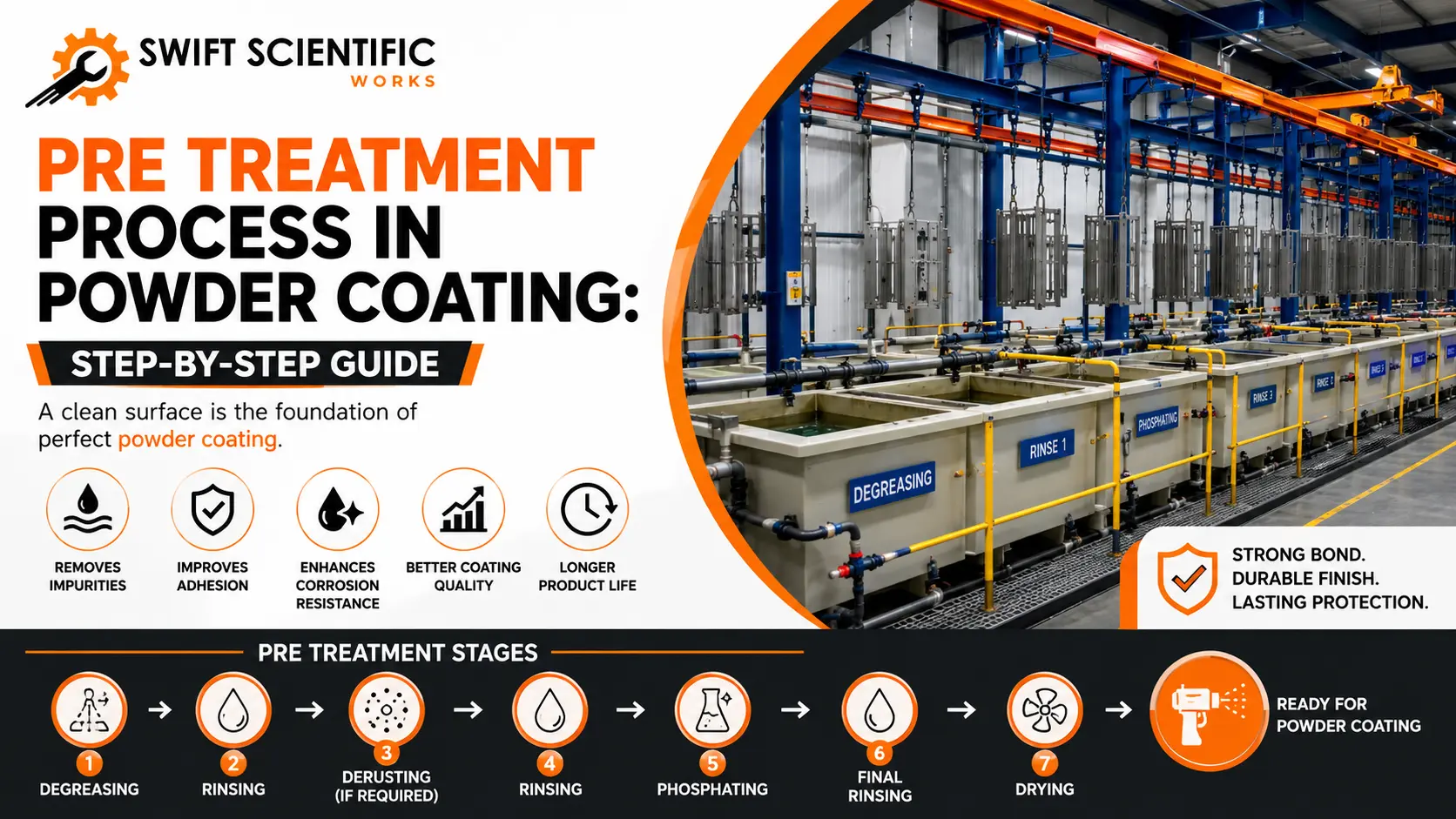
The primary objective of pre treatment is to remove contaminants and create a clean surface for maximum powder adhesion.
Without proper pre treatment, manufacturers may experience:
- Poor coating adhesion
- Surface blistering
- Premature coating failure
- Rust formation
- Uneven finish
- Reduced product life
Proper pre treatment ensures that the final coating remains durable and visually appealing for many years.
Step 1: Initial Inspection of Components
The first stage of the pre treatment process begins with inspecting the metal components.
Manufacturers evaluate:
- Surface condition
- Presence of oil and grease
- Rust formation
- Welding residues
- Dust and contaminants
This inspection helps determine the type of treatment required before powder coating.
Step 2: Degreasing
Degreasing is one of the most important stages in the powder coating process.
During manufacturing, metal surfaces often accumulate:
- Lubricants
- Oils
- Grease
- Cutting fluids
- Dirt particles
Degreasing chemicals remove these contaminants and prepare the surface for subsequent treatment stages.
Benefits of Degreasing
- Improved powder adhesion
- Cleaner surface finish
- Reduced coating defects
- Better treatment efficiency
Without effective degreasing, coating performance can be significantly affected.
Step 3: Water Rinsing
After degreasing, components are rinsed thoroughly with clean water.
The purpose of rinsing is to:
- Remove chemical residues
- Prevent contamination
- Improve process consistency
Proper rinsing ensures that chemicals from the previous stage do not interfere with subsequent treatments.
Step 4: Derusting (If Required)
Certain metal components may contain rust, oxidation, or mill scale. In such cases, a derusting stage is added to the process.
Specialized chemicals are used to remove:
- Rust deposits
- Oxide layers
- Surface scale
Derusting helps restore the metal surface and improves coating performance.
Why Derusting Matters
Rust trapped beneath powder coating can continue to spread and eventually cause coating failure. Therefore, complete rust removal is essential for long-term durability.
Step 5: Water Rinsing After Derusting
Following derusting, components undergo another rinsing stage.
This helps:
- Remove residual chemicals
- Prevent chemical carryover
- Maintain treatment effectiveness
Clean water rinsing plays a vital role in achieving a defect-free finish.
Step 6: Phosphating
Phosphating is often considered the most important step in the process of powder coating. During this stage, a thin phosphate layer forms on the metal surface.
This protective layer provides several benefits:
- Enhanced powder adhesion
- Improved corrosion resistance
- Better coating durability
- Increased coating life
Phosphating creates an ideal foundation for powder coating application.
Types of Phosphating
Common phosphating methods include:
- Iron Phosphating
- Zinc Phosphating
The choice depends on the product application and required corrosion protection level.
Step 7: Final Water Rinsing
Once phosphating is completed, components are rinsed again to remove excess chemicals.
This stage ensures:
- Surface cleanliness
- Consistent coating quality
- Reduced contamination risks
Many advanced pre treatment plants include multiple rinsing stages for improved performance.
Step 8: Drying Process
Before entering the powder coating booth, components must be completely dry.
Any moisture left on the surface can cause:
- Pinholes
- Blisters
- Poor powder adhesion
- Surface defects
Drying is typically performed using hot air systems or drying ovens.
Proper drying ensures the powder adheres evenly during application.
Step 9: Powder Coating Application
After pre treatment and drying, the components move to the powder coating booth. Electrostatic spray guns apply powder particles to the grounded metal surface.
The charged powder particles are attracted to the metal, creating a uniform coating layer.
This stage is where the actual coating begins, but its success largely depends on the quality of the pre treatment process.
Step 10: Curing Process
The coated components are transferred to a curing oven.
Inside the oven:
- Powder melts
- Flows across the surface
- Chemically cures
- Forms a durable protective film
Most powder coatings cure between 180°C and 220°C. The curing process transforms the powder into a hard, attractive, and long-lasting finish.
Why Choose Swift Scientific Works?
Swift Scientific Works (SSW) is a trusted manufacturer and supplier of advanced powder coating plant in India. We specialize in designing and manufacturing high-performance pre treatment plants, powder coating booths, curing ovens, batch type powder coating plants, and conveyorized powder coating systems.
Our solutions are engineered to deliver:
- Efficient surface preparation
- Superior coating adhesion
- Excellent corrosion protection
- Consistent coating quality
- Long-term operational reliability
With years of industry experience, SSW helps manufacturers achieve better productivity and outstanding powder coating results.
Conclusion
Understanding the pre treatment process in powder coating is essential for achieving superior coating quality and long-term durability. While many people focus on the powder application stage, the reality is that the success of the entire powder coating process depends heavily on proper surface preparation.
From degreasing and phosphating to drying and curing, every stage plays a crucial role in ensuring strong adhesion and excellent corrosion resistance. By implementing an effective pre treatment system, manufacturers can improve product quality, reduce defects, and maximize the lifespan of their powder-coated products.
For industries seeking reliable powder coating information, one fact remains clear: a successful powder coating finish always begins with proper pre treatment.